
Canada 25% Kitchen Cabinet Tariff: Buyer Guide
Canada’s 25% cabinet surtax depends on manufacturing origin and product scope. Check exemptions, estimate quote impact, and see the 200-day timeline.
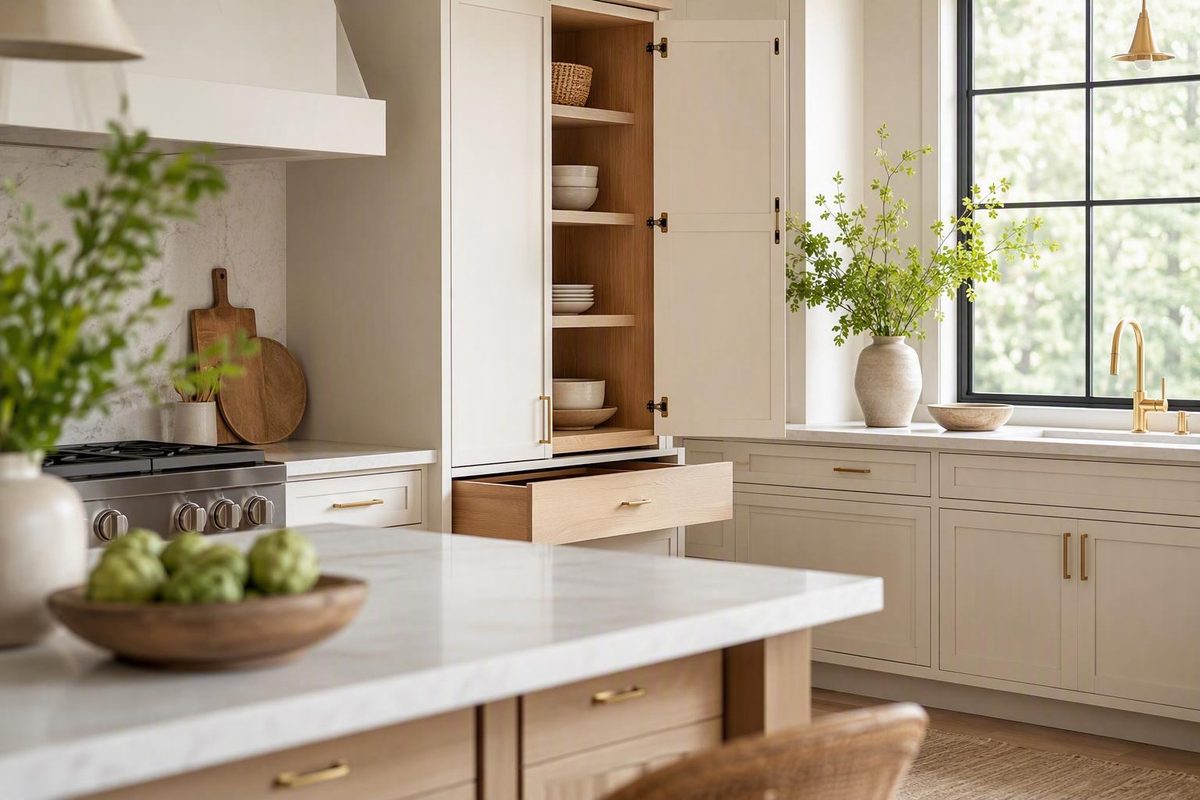
Canada’s 25% cabinet surtax does not apply to every kitchen cabinet or renovation. It is a provisional border charge on covered imports of certain wood cabinets and vanities. The finished product’s manufacturing origin—not the retailer’s location, brand headquarters or shipping warehouse—determines whether an announced country exclusion may apply.
Choose the manufacturing country and product form, then enter the assumed value of the covered goods.
This estimates the announced 25% charge only when a finished wood cabinet or vanity is potentially covered. Enter the assumed value of covered goods, not the complete renovation price.
Potentially subject to the 25% surtax
The calculation does not establish customs value, coverage or actual retailer pass-through.
| Manufacturing origin | Finished wood cabinet or vanity | RTA flat-pack | Components |
|---|---|---|---|
| Canada | Not an imported finished good | Not imported if made in Canada | Inputs need separate review |
| United States | Announced exclusion | Classification unresolved | Classification unresolved |
| Mexico | Announced exclusion | Classification unresolved | Classification unresolved |
| Israel | Announced exclusion | Classification unresolved | Classification unresolved |
| Chile | Announced exclusion | Classification unresolved | Classification unresolved |
| Qualifying developing country | Announced exclusion | Classification unresolved | Classification unresolved |
| Other or not listed | Potentially 25% | Classification unresolved | Classification unresolved |
Effective
Expected Tribunal report
May end earlier
The checker is a screening tool, not a customs-classification decision. Finished wood cabinets and vanities from a non-excluded country are potentially subject to the surtax. Flat-pack units, unfinished components, doors, panels and mixed-material products require further classification guidance.
The Surtax Is Limited to Covered Imported Goods
Canada imposed a provisional 25% safeguard surtax on certain imported wood cabinets and vanities effective July 31, 2026. It can remain in place for no more than 200 days and may end earlier.
The measure was introduced while the Canadian International Trade Tribunal investigates whether increased imports are causing or threatening serious injury to Canadian wood manufacturers. The federal government requested the inquiry in April 2026. The Tribunal is expected to complete its work by January 15, 2027.
The Department of Finance announcement confirms the 25% rate, effective date, 200-day maximum and expected Tribunal date. The provisional measure is not a final Tribunal finding that imports have caused serious injury.
Three limits matter when reviewing a cabinet quote:
- Certain: Coverage depends on the product definition and customs classification.
- Wood: The announcement does not establish a general tariff on cabinets made from every material.
- Imports: The measure concerns covered goods entering Canada, not every cabinet sold or installed in Canada.
A Canadian-made finished cabinet is not itself an imported finished cabinet. Imported materials used by a Canadian manufacturer present a separate classification question that the available announcement does not resolve.
The same distinction applies to a renovation proposal. Countertops, appliances, installation, electrical work, plumbing and demolition do not become subject to a cabinet surtax merely because they appear on the same contract.
Manufacturing Origin Determines the Announced Exclusion
The government announcement excludes qualifying wood cabinets and vanities manufactured in:
- The United States
- Mexico
- Israel
- Chile
- Developing countries covered by the announced exclusion
These are origin exclusions, not retailer exclusions. Cabinets sold by a Canadian dealer can be manufactured in Canada, an excluded country or a country potentially subject to the surtax.
A U.S. brand name is not proof of U.S. manufacture. A product can also pass through a U.S. warehouse without acquiring U.S. origin. Ask where the finished goods were manufactured rather than where they were purchased, stored or shipped.
“North American” is too imprecise for this purpose. Canada, the United States and Mexico can have different consequences, while a North American company may source a particular line elsewhere.
Ask the seller to identify the country of manufacture in writing. Commercial importers should verify the origin evidence required under current Canadian customs rules, particularly for mixed-origin goods.
Product Form Must Be Confirmed Before Applying 25%
The public announcement identifies certain wood cabinets and vanities, but it does not provide enough technical detail to classify every cabinet-related item. The available evidence does not support a definitive answer for:
- Ready-to-assemble or flat-pack cabinets
- Separately imported doors and drawer fronts
- Face frames and frameless cabinet parts
- Unfinished cabinet components
- Panels, fillers, mouldings and decorative accessories
- Mixed-material products
- Mixed-origin goods
- Cabinets assembled in Canada from imported parts
- Hardware packed with or shipped separately from cabinets
Everyday product descriptions do not necessarily match customs classifications. A box labelled “cabinet components” may not receive the same treatment as a finished cabinet, and an RTA unit may require a specific classification analysis.
Countertops, appliances, flooring, standalone hardware, general furniture, delivery and installation are not shown to be covered by the cabinet announcement. They should not be assigned a 25% increase without applicable customs guidance.
For a potentially affected order, ask the supplier:
- Is the product being treated as covered by the provisional safeguard?
- Where was the finished product manufactured?
- Which customs classification is being used?
- Does the quoted price assume the surtax applies, does not apply or remains uncertain?
- Can the price change if customs treatment differs from that assumption?
- Will those answers appear in the quote or contract?
Customs Notice 26-17 was revised on August 5, 2026, but the supplied CBSA customs-notice address returned a 404 page when reviewed. A dead address does not prove that no operative instrument exists. It does mean that page could not verify detailed classifications, valuation, collection procedures, origin documentation or transitional treatment.
Importers should obtain the current instrument through CBSA or a qualified customs broker before declaring a shipment covered or exempt.
A 25% Border Charge Does Not Make the Whole Kitchen 25% Costlier
The rate applies to the applicable value of covered imported goods under the governing customs rules. It does not automatically apply to the total installed-project price.
| Quote Category | What to Confirm |
|---|---|
| Cabinet goods | Product, origin and classification |
| Countertops and appliances | Price separately; coverage not established |
| Freight and delivery | Do not automatically label as covered cabinets |
| Installation and trades | Separate services from imported goods |
If C$20,000 were the applicable value and every item in that amount were covered, 25% would equal C$5,000. This is arithmetic, not a determination that C$20,000 is the proper customs value or that the customer’s price must rise by C$5,000.
The seller might absorb all of the direct charge, share it with the customer or pass it through in full. A purely illustrative half-and-half split would put C$2,500 of the C$5,000 charge into the customer’s price. There is no evidence that this split—or any other pass-through rate—is typical nationally.
Even full pass-through on covered cabinets would not make an entire C$20,000-plus renovation 25% more expensive when the project also contains unaffected goods and services.
Quote changes can also reflect existing inventory, exchange rates, supplier concessions, distributor margins, freight, finish changes, construction changes and installation requirements. A seller may spread an added cost across a product category rather than show a separate tariff line. Another seller may hold prices while selling inventory acquired earlier.
No verified national estimate is available for the resulting cabinet-price increase, pass-through rate, renovation-budget effect or lead-time change. The Retail Council of Canada warned of higher prices or reduced availability, while cabinetmakers disputed parts of that forecast. CTV News reported the competing industry positions, but those forecasts are not measured national outcomes.
For a meaningful comparison, request like-for-like quotes for a Canadian-manufactured line, a qualifying line from an excluded country and a line from a potentially covered country. Keep the layout, door style, finish, box construction, hardware, accessories, freight and installation assumptions consistent.
The Provisional Measure Can End Before 200 Days
The announced timeline has four main points:
- April 2026: The federal government requested a safeguard inquiry concerning certain wood goods.
- July 31, 2026: The provisional surtax took effect.
- January 15, 2027: The Tribunal is expected to complete its inquiry.
- Up to 200 days: The provisional surtax may remain in place for no more than this period.
The 200 days are a maximum, not a guaranteed duration. A Canadian Press report also confirms the ceiling and expected Tribunal date in its summary of the temporary measure.
If the Tribunal makes a no-injury finding, the provisional surtax stops applying as of that finding. If it finds injury or threatened injury, it may recommend remedies it considers warranted.
A recommendation would not necessarily preserve the provisional measure unchanged. Any later rate, product scope, duration or replacement measure must be assessed from the Tribunal’s findings and subsequent government action.
The announcement does not settle whether goods ordered before July 31, already in transit, stored in a Canadian warehouse or covered by a signed contract receive transitional treatment. Do not assume that any of those circumstances automatically creates an exemption or grandfathering right.
A Useful Quote Separates Origin, Goods and Adjustments
Before paying a deposit, obtain a written quote that identifies:
- Cabinet line and model
- Box and front materials
- Country where the finished product was manufactured
- Whether the seller treats it as covered by the provisional surtax
- Cabinet-goods price apart from countertops, appliances and labour
- Any separately identified tariff-related adjustment
- Quote-expiry date
- Deposit amount and refund terms
- Cancellation and substitution terms
- Any duty, tariff or government-charge adjustment clause
For an existing order, keep the original and revised prices, order and deposit dates, shipment status, supplier explanation and any classification or origin documents provided.
The government announcement does not determine whether a seller can change an accepted price or which party bears a later government charge. That depends on the agreement and applicable law. Material disputes over adjustment clauses, cancellation rights or deposits may require legal advice.
A blanket statement such as “all cabinets went up 25%” does not explain the charge. Ask the seller to identify the affected product and distinguish a claimed surtax adjustment from changes in freight, currency, materials, margin or specification.
Product Substitutions Require a New Layout Check
Switching to a Canadian-made or excluded-origin cabinet line may avoid a pricing issue while creating a dimensional one. Product lines described as standard are not necessarily interchangeable.
Recheck cabinet widths, finished ends, fillers, scribes, door clearances, corner requirements, appliance openings, tall-unit heights and crown details. Verify islands and aisles as well as plumbing, electrical and ventilation locations.
Use Kitchen Cabinet Sizes Are Standard, but Walls Aren’t to review the planning dimensions. Manufacturer drawings and appliance specifications should control the final installation.
A three-inch change in available cabinet sizes can shift fillers, appliance clearances or symmetry across an entire run. Do not approve an origin-based substitution from a price sheet alone.
Canada’s Surtax Is Separate From the U.S. Cabinet Tariff
Canada’s provisional safeguard concerns covered goods entering Canada. The U.S. Section 232 measure concerns covered cabinets and vanities entering the United States, including Canadian exports.
| Measure | Border Direction | Basic Issue |
|---|---|---|
| Canadian safeguard | Goods entering Canada | Provisional surtax during inquiry |
| U.S. Section 232 | Goods entering the U.S. | Separate U.S. sectoral tariff |
A Canadian homeowner buying cabinets in Canada is not automatically subject to the U.S. tariff. A Canadian manufacturer shipping covered products to a U.S. customer must consider the U.S. regime.
Current Canadian guidance says certain kitchen cabinets and vanities imported into the United States face a 25% Section 232 tariff, including Canadian products, and CUSMA compliance does not create an exemption from that sectoral measure. It identifies a scheduled increase to 50% on January 1, 2027. Businesses should recheck the rate before shipment because tariff policy can change. The Trade Commissioner Service guidance is a starting point for that separate issue.
Earlier announcements contained different U.S. schedules, and a previously announced January 2026 increase did not occur. U.S. assumptions about classification, valuation or tariff stacking should not be used to interpret Canada’s safeguard.
Several Technical Questions Remain Unresolved
Accessible, current customs material is still needed to confirm:
- Exact covered tariff classifications
- Treatment of RTA units, doors, frames and other parts
- Treatment of mixed materials and mixed origins
- Treatment of Canadian assembly using imported components
- Required evidence of manufacturing origin
- The value on which the surtax is calculated
- Collection and remittance procedures
- Rules for contracted, warehoused or in-transit goods
- Adjustment or refund procedures
The January 15, 2027 Tribunal report is the next announced milestone, but it may not answer every commercial or administrative question immediately.
Until then, the workable buyer test is specific: identify the product, obtain its manufacturing country in writing, confirm how the seller classified it and require any claimed tariff adjustment to be separated from the rest of the kitchen price.